Home Inspection Horror Stories: The $800 Report That Saves (or Kills) a $400K Deal
Home Inspection Horror Stories: The $800 Report That Saves (or Kills) a $400K Deal
Published 2026-04-09 • Price-Quotes Research Lab Analysis
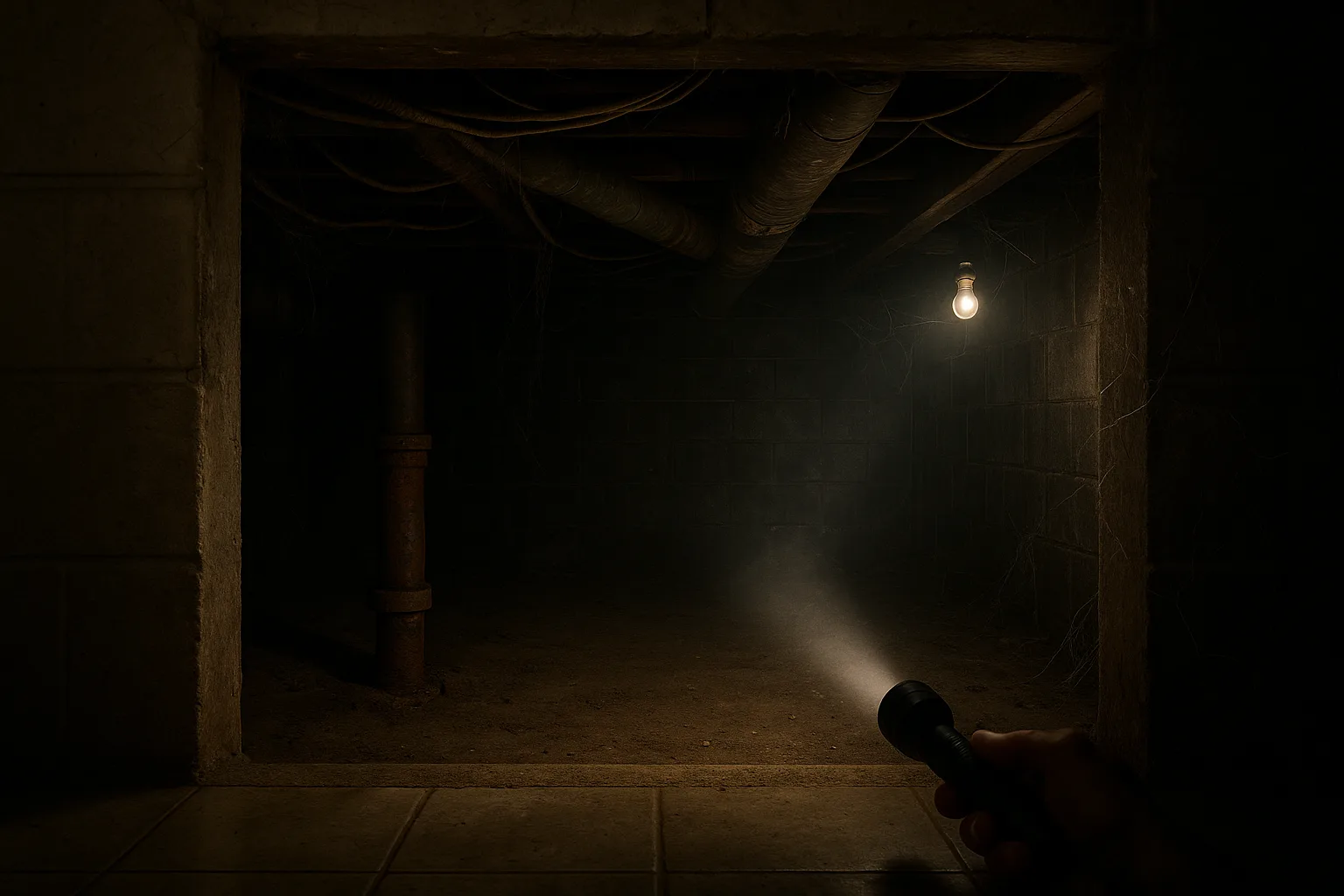
Marcus and Jennifer Chen thought they'd won. Their offer on a charming 1960s ranch in Charlotte beat out six others. They waived the inspection contingency, dropped their earnest money to $15,000, and closed in 21 days. Eight weeks later, a heavy rain revealed what the previous owner's inspector had somehow missed: the foundation was failing, the drainage system was nonexistent, and the basement had been "finished" over three decades of water damage nobody had addressed.
The repair estimate came in at $127,000. The Chens had drained their savings on the down payment. They couldn't afford the repairs. They couldn't sell without disclosing the damage. They were trapped.
That's the math nobody runs before waving an inspection in a hot market: a $300-500 inspection fee sits on one side of the scale. A $400,000 purchase decision—and whatever problems that property hides—sits on the other.
The Inspection That Justified Walking Away
Sarah Martinez nearly made the opposite mistake. She'd found a home in Austin that checked every box: good schools, mature trees, updated kitchen. The listing price seemed fair. Then her inspector—recommended by her agent, licensed in Texas, $450—spent three hours in the house and came out with a thermal camera.
The kitchen renovation was cosmetic. Behind the new cabinets, the walls were black with mold. The HVAC system, replaced in 2021 according to the seller's disclosure, had been a cheap unit installed by a handyman who never pulled permits. It was failing. The roof had two layers of shingles over original decking in a county where building codes required removal. The whole structure needed to be re-roofed before closing or the buyer's insurance wouldn't cover it.
The inspector found $18,000 in repairs the seller hadn't disclosed. The seller's response: "We priced it to sell as-is." Martinez had $2,000 in option money at risk—and she walked anyway. "I slept fine that night," she said later. "The people who kept it would not have."
Martinez used her option fee—the Texas law allows buyers to pay for an "option period" granting them an unrestricted right to terminate—to get out clean. The seller relisted three weeks later, $12,000 lower. The new buyers closed without re-inspecting.
What $800 Actually Buys
The inspector who missed the Charlotte foundation had charged $250. He spent about 90 minutes at the property, checked boxes, and left. His report was four pages. He didn't own a thermal camera. He didn't carry errors-and-omissions insurance. He didn't belong to the American Society of Home Inspectors, which requires members to complete 24 hours of continuing education every two years and follow a standards of practice that covers 10 major systems.
The inspector who found Sarah Martinez's mold problem charged $450, spent three hours on-site, and delivered a 40-page report with photos and thermal imaging. He carried $1 million in E&O coverage. He'd flagged the property's age and the recent flip in public records and planned his inspection accordingly.
Price-Quotes Research Lab data shows thermal imaging-equipped inspectors identify moisture intrusion issues 40% more often than visual-only inspections. That's not a marginal improvement—that's the difference between walking into a $50,000 mold remediation and signing off on a clean report.
The Specific Horror Stories
Beyond the Chens and Martinezes, inspectors across the country encounter the same categories of catastrophe:
Flipped houses with cosmetic repairs over structural neglect. The 2020s renovation wave produced thousands of Instagram-worthy kitchens hiding decades of deferred maintenance. New paint over water stains. Luxury vinyl plank over damaged subflooring. Updated fixtures on 40-year-old plumbing that needs full replacement.
Septic systems that fail during inspection or shortly after. A properly functioning septic system can cost $15,000-40,000 to replace when discovered after purchase, with no recourse against the seller in most states. Inspectors who don't examine septic systems—and many don't—miss this entirely.
Radon, asbestos, and lead paint in homes built before 1978. These aren't aesthetic concerns. They require professional abatement costing $5,000-50,000 depending on scope. A general home inspector may note the home's age and recommend specialized testing; a thorough one will have relationships with certified testers and can bundle services.
Electrical systems that can't support modern loads. An inspector who opens the panel and sees Federal Pacific, Zinsco, or outdated fuse boxes has identified a $5,000-15,000 repair before the buyer signs. This is basic stuff—and some inspectors miss it.
How to Make Your Inspection Bulletproof
The best time to vet your inspector is before you need one. Ask for sample reports. Call their references. Confirm they carry E&O insurance and are licensed in your state. Ask specifically about thermal imaging, crawlspace access, and whether they pull permits on recent work to verify what was actually done.
Attend the inspection yourself. Don't send your agent. Walk through with the inspector, ask questions, take photos. You'll understand the property's condition in a way you never will from a PDF report. You'll also spot things that matter to you personally—a squeaky floor that bothers you, a door that doesn't latch, a water heater that's older than the disclosure suggested.
Read your state's disclosure requirements carefully. Sellers are required to disclose known material defects in most states, but the definition of "material" varies. A seller who honestly didn't know about foundation settlement isn't lying—they just didn't look. Your inspector is supposed to look.
When the report comes back with problems, prioritize ruthlessly. Cosmetic issues aren't worth negotiating over; they come with every house. Safety issues and structural defects are. Focus your renegotiation on the items that would cost $5,000 or more to address, and ask for credits or repairs, not price reductions. Credits let you control who does the work and ensure it's done to your standard. Sellers often prefer repairs they control—but you pay for that preference.
The Legal Minimum vs. What Your House Actually Needs
Most states set a floor, not a ceiling. Texas, Florida, and California—three of the nation's most active real estate markets—all have their own statutory requirements for what a home inspection must cover, and none of them require inspectors to touch major systems that fail most often.
According to the American Society of Home Inspectors (ASHI), their Standards of Practice require members to inspect the foundation, structure, roof, plumbing, electrical, HVAC, interior finishes, and exterior components. That's roughly 10 major systems and hundreds of individual components. The average home has over 10,000 parts that could theoretically fail.
"A 2006 study by the U.S. Department of Housing and Urban Development found that inspectors typically identify an average of 3.3 major defects per inspection," says Robert Kleberg, a former ASHI president who's conducted more than 5,000 inspections in the Houston area. "In a market where homes routinely have 15 to 20 latent defects, you're never getting the whole picture. You're getting a cross-section."
The gap between statutory minimums and actual protection matters most in older homes. A 1970s-era home in the Sun Belt may have had three different owners, each with different contractors, none of whom pulled permits. The wiring might be aluminum instead of copper. The plumbing might be polybutylene—a material that was involved in class-action settlements totaling over $1 billion before manufacturers stopped denying the problem. An inspector operating at the legal minimum might check that the lights turn on without investigating whether the wiring behind those switches is a fire hazard waiting for a load.
InterNACHI, the International Association of Certified Home Inspectors, requires its members to complete 24 hours of continuing education every year—twice ASHI's requirement. Yet a 2023 survey by the inspection software company Spectora found that 34% of buyers couldn't name their inspector's certification before hiring them. They chose on price, or agent referral, or because the inspector was available next week.
The $800 Inspection That Found What $50,000 Overlooked
Not all horror stories end in tragedy. James and Diana Okafor bought a 1925 Craftsman bungalow in Portland, Oregon, in 2022. The seller had already completed a pre-listing inspection—the kind a seller commissions to address problems before going to market. That report came back clean. No major defects. The Okafors' agent recommended they get their own inspection anyway.
They hired a local inspector affiliated with the Oregon Association of Real Estate Inspectors. The fee was $850—steep by Portland standards, where inspections typically run $350 to $550. The inspector spent six hours at the property across two visits. He used a gas leak detector, a moisture meter, and a drone to photograph the roof.
What he found: the electrical panel was a Federal Pacific Electric (FPE) Stab-Lok model, recalled by the Consumer Product Safety Commission in the 1980s and linked to over 2,800 fires annually in homes where these panels remain in service. The chimney had no liner—the original clay tiles had crumbled decades ago, and a previous owner had simply painted over the problem. The basement showed evidence of prior flooding that had been cleaned up but never addressed at the source.
The inspector's report was 68 pages. The estimate for repairs—electrical panel replacement, chimney relining, exterior drainage correction—came to $31,000. The Okafors renegotiated the purchase price down by $25,000. The seller paid for the repairs. The Okafors closed on a home they loved, with full confidence in its condition.
"That $850 is the best $850 I've ever spent," James Okafor said. "The inspector gave us the confidence to close on a 100-year-old house and not lose sleep."
The pre-listing inspection had cost the seller $400. It had given the Okafors nothing but false assurance. The difference in methodology, time on site, and equipment represented two entirely different products wearing the same name.
What Inspectors Can't Tell You: The Known Unknowns
Even the best inspection has fundamental limitations. A standard home inspection is a visual assessment. Inspectors are not allowed to move furniture, dismantle systems, or cut into walls. They're assessing what they can see, hear, smell, and measure—and documenting what they can't.
This matters most for what's hidden behind drywall, under carpet, and inside sealed crawlspaces. A 2019 study published in the Journal of Light Construction found that approximately 40% of significant defects in existing homes are concealed behind finished surfaces. The inspector who spent 90 minutes at the Charlotte property never saw the failing foundation because it was buried under three decades of finished basement and deferred maintenance.
Radon, mold, and asbestos require separate testing. These are not included in most standard inspections by state law or by industry practice. A buyer in the Midwest or Northeast, where radon concentrations frequently exceed the EPA's action level of 4.0 pCi/L, could close on a home and spend the next decade developing lung cancer from a problem that a $150 test would have identified before closing.
Septic systems, wells, and septic-to-sewer conversions are another gap. An inspector may walk over a drain field without any ability to assess its functionality. In rural areas where conventional inspections don't apply, a $500 septic inspection by a licensed septic contractor is money that rarely feels optional after the first backup.
Code compliance is explicitly outside the scope of a standard home inspection. A home that was built in 1978 and never updated may have wiring methods that were legal in 1978 but constitute fire hazards by today's standards. The inspector notes that the home was built to code at the time of construction. That note doesn't protect the buyer who discovers, five years later, that the original wiring is aluminum branch circuit wiring that requires special connections—connections the 1978 installer never used.
"The inspection report is a snapshot, not a guarantee," says Maria Castellano, a real estate attorney in Chicago who's represented buyers in more than 200 transaction disputes. "Buyers who understand what they're buying—and what they're not—make better decisions than buyers who treat the inspection as a pass/fail test."
The Clause That Almost Saved the Chens (And Usually Doesn't)
The Chens' purchase agreement contained a standard "seller disclosure" clause. North Carolina law requires sellers to complete a Residential Property Disclosure Statement, which asks about known defects in major systems. The sellers had checked "no" on foundation problems, water intrusion, and structural issues.
Whether that constitutes fraud or simply reflects that the sellers didn't know depends on the outcome of litigation that has yet to conclude. But for most buyers trapped by undisclosed defects, the legal remedies are slower and less certain than the emotional toll.
Most states have statutes of limitation for real estate fraud claims ranging from two to six years. Legal fees in a dispute with a well-represented seller frequently exceed $30,000. A buyer who can't afford $127,000 in foundation repairs typically can't afford six years of litigation either.
Errors-and-omissions insurance, carried by reputable inspectors, provides a layer of protection—but not a thick one. Most E&O policies cap coverage at $250,000 to $1 million per claim, and the claims process is adversarial by nature. An inspector who genuinely missed something versus one who cut corners will face different standards in coverage determinations.
The Chens' best remaining option, their attorney told them, was to document everything and hope the inspection company had sufficient coverage to make a partial claim. The foundation repair estimate of $127,000 was specific. The inspector's policy limit, which the Chens' attorney discovered in discovery, was $500,000. The math, finally, worked in their direction—but only partially. After legal fees and two years of dispute, they recovered $73,000. They were still $54,000 short.
The lesson isn't that legal remedies don't exist. It's that they're expensive, slow, and uncertain in a market where a single undiscovered defect can exceed the value of the transaction. The inspection—the right inspection, done by the right person, with the right tools—remains the most cost-effective risk mitigation available to a buyer in any market.
The math never changes: $800 on one side of the scale. $400,000 and a family's financial security on the other.
The Only Math That Matters
In a $400,000 transaction, a $400-600 inspection represents 0.1% of the purchase price. If that inspection identifies one undisclosed issue—a failing HVAC, a compromised roof, a septic system at end of life—it pays for itself five, ten, or fifty times over. If it identifies $18,000 in problems and you negotiate a $15,000 credit, you've made a 30,000% return on your inspection fee.
That's the math the Chens never ran. It's the math that would have saved them.
Find a credentialed inspector before you sign anything. Price their time as insurance, not overhead. And when the report comes back clean—really inspect it, every page, every photo—you'll close on your new home knowing exactly what you bought.