The True Cost of Owning a Home: Beyond Mortgage Payments, the Expenses Nobody Warns You About
The True Cost of Owning a Home: Beyond Mortgage Payments, the Expenses Nobody Warns You About
Published 2026-04-10 • Price-Quotes Research Lab Analysis
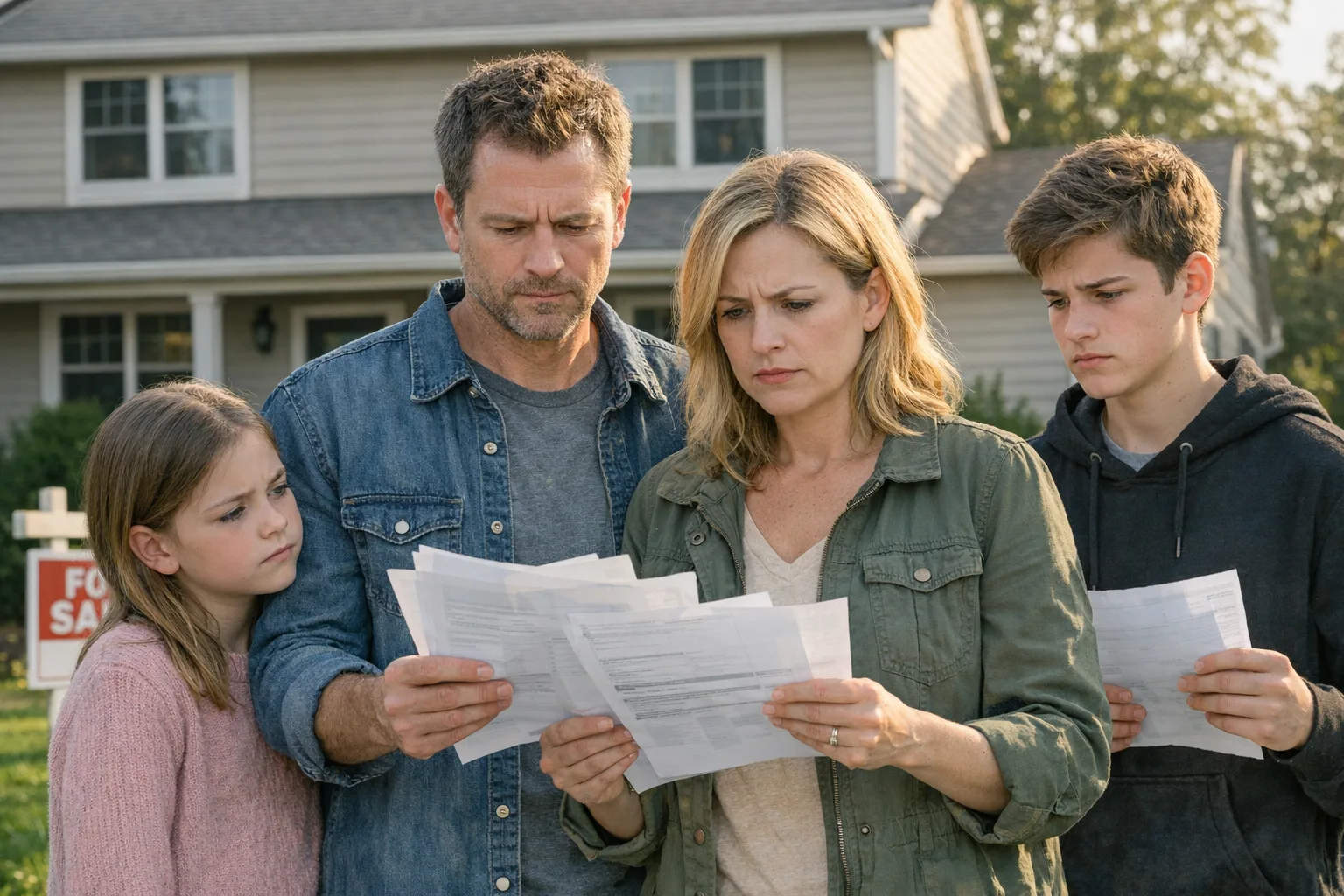
The $9,200 Bill Nobody Hands You at Closing
That $2,300 mortgage payment looks manageable sitting next to your old $2,100 rent check. The math seems obvious. You found a house, locked in a rate, and you're ready to sign. Stop. The true cost of owning a home runs 50% to 80% higher than that monthly payment alone, according to comprehensive analysis from WealthVieu's 30-year breakdown. Before you sign anything, you need to understand every dollar that's about to flow out of your account—before you get the keys and every month after.
Price-Quotes Research Lab spent weeks pulling apart every line item in homeownership costs across multiple sources, from industry calculators to real estate consultancies. What we found will change how you negotiate, how you budget, and whether you should buy at all.
Closing Costs: The $8,000 to $20,000 Entrance Fee
You found a house. The seller accepted your offer. Congratulations—you just committed to writing a check for $8,000 to $20,000 that nobody at the open house mentioned. Closing costs on a $400,000 home run between 2% and 5% of the purchase price, and those numbers aren't negotiable in the way you might think. Some buyers negotiate seller concessions to cover part of this tab, but True Housing Cost's breakdown makes clear the money still moves—it just shifts which account it comes from.
So what's packed inside that closing cost envelope? Here's the itemized nightmare:
Loan origination fee: The lender charges you to process your loan. Typically 0.5% to 1% of the loan amount. On a $320,000 loan after your 20% down payment, that's $1,600 to $3,200 going straight to the bank.
Appraisal: The lender needs confirmation the house is actually worth what you're paying. $400 to $600, paid by you, regardless of whether the appraised value matches your offer.
Title insurance: Protects the lender (and sometimes you) from ownership disputes that emerge later. This can run $1,000 to $3,000 depending on home price and location.
Attorney fees: In states requiring attorney involvement in real estate transactions, expect to pay $500 to $2,000 for document review and closing representation.
Recording fees, transfer taxes, and prepaid items: Government charges for recording your deed, local transfer taxes, and upfront property tax payments. These vary by state and locality but can add another $1,000 to $3,000 to your opening balance due.
Buyers walk into closing expecting keys and walk out with a hangover. Realtor.com's 2026 analysis confirms this sticker shock is consistent across markets—the percentages hold whether you're buying in rural Montana or coastal California.
Property Taxes: The Annual Bill That Never Stops
The national median effective property tax rate sits around 1.1%, which on a $400,000 home means $4,400 per year, or $367 per month added to your housing costs. That number sounds manageable until you realize it's a floor, not a ceiling. Property taxes vary so dramatically by state that the same $400,000 home costs $8,800 annually in New Jersey (2.2% effective rate) and under $1,200 in Hawaii (under 0.3% effective rate).
But here's what the listing agent won't volunteer: property taxes don't stay flat. As your home gets reassessed—typically when you purchase, when you refinance, or on local assessment cycles—the number climbs. HomeGuide's cost breakdown notes that property tax escalation is one of the most consistently underestimated long-term expenses. You buy the house knowing this year's bill, but you're locking in a 30-year cost structure that will march upward with local government budgets, school district funding needs, and reassessment cycles.
In some states, property tax bills arrive annually and feel manageable when spread. In others, particularly states without income taxes, property taxes become the primary funding mechanism for local services. Texas and New Hampshire are famous for this structure. You buy a home expecting a certain monthly payment and discover your escrow account never quite keeps up with the actual bill.
Homeowners Insurance: The Bill That Climbs When You Need It Least
The national average for homeowners insurance runs $1,500 to $2,500 per year, with $1,900 being the typical midpoint. That number seems reasonable until you factor in your location. Coastal properties in hurricane-prone areas routinely see premiums of $3,000 to $8,000 annually. Homes in wildfire zones in California or Colorado face similar escalation. In some high-risk ZIP codes, insurance has become effectively unavailable through private markets, pushing owners to state-run insurer-of-last-resort programs with even higher price tags.
Climate change is rewriting insurance math in real time. Insurers are pulling out of entire states, leaving homeowners with limited (and expensive) options. Florida has seen multiple major carriers exit the market. California's wildfire exposure has triggered similar withdrawals. If you're buying with the expectation that insurance costs will remain stable, you're betting against an industry that's already changing its models.
The other insurance wrinkle: your deductible isn't a flat amount. Many homeowners carry $1,000 or $2,500 deductibles, meaning every claim you file comes with that amount subtracted from your payout. When a hailstorm damages your roof, you're writing that first check before insurance kicks in anything.
HOA Fees: The Monthly Bill Nobody Reads About
Condos, townhomes, and an increasing number of single-family developments come with homeowners association fees that run from $100 to $1,500 per month. These fees cover shared maintenance, amenity upkeep, and community management—but they also come with rules. What you can paint, how you landscape, whether you can rent your home, parking restrictions, pet limitations. The financial cost is visible. The lifestyle cost shows up when you want to make changes to your own property.
HOA fees also have a documented tendency to rise faster than inflation. Buildings age and require bigger maintenance reserves. Communities add amenities. Management companies raise rates. A $300 monthly HOA fee that seems fine today could be $500 in ten years, and there's nothing you can do about it as an individual owner unless you're willing to run for the board and fight the increases from within.
CGP Real Estate Consulting's analysis highlights HOA fees as one of the most commonly overlooked line items in the rent-versus-buy calculation. First-time buyers in particular tend to see the purchase price and the mortgage payment without factoring in the monthly cost of community membership.
Maintenance: The Cost That Grows With Your House
Rule of thumb says budget 1% to 2% of your home's value annually for maintenance and repairs. On a $400,000 home, that's $4,000 to $8,000 per year, or $333 to $667 per month. Most new homeowners don't do this. Most new homeowners discover this rule the hard way when the HVAC system dies in year seven or the water heater fails in year twelve.
The pattern of maintenance costs isn't linear. WealthVieu's year-by-year analysis maps how costs escalate through different ownership phases:
Years 1-2: Relatively quiet. You're dealing with punch list items from the builder, minor adjustments, and the discovery of things that weren't disclosed. Annual costs might run $1,500 to $3,000 as you address settling issues and learn your home's quirks.
Years 3-5: Systems start their mid-life adjustments. Appliances begin showing age. Landscaping matures and needs more maintenance. You'll spend $3,000 to $5,000 annually on average, according to the 30-year model.
Years 5-10: First major replacements arrive. Water heater ($800-$1,500), HVAC service and possible replacement ($3,000-$10,000), roof repairs ($5,000-$15,000 for full replacement). This period sees the biggest single-cost events in homeownership.
Years 10-20: The heavy hitters. Kitchen and bathroom remodels ($20,000-$100,000 depending on scope), major appliance replacement cycles, foundation inspections and repairs ($5,000-$20,000 for common issues), and exterior updates.
Years 20-30: Ongoing maintenance and the reality that everything is old. You own a 30-year-old house with 30-year-old systems. Average annual costs push toward $8,000-$12,000 as you address accumulated wear.
The "I'll DIY Everything" Trap
First-time homeowners frequently convince themselves they'll save money by handling maintenance themselves. This math only works if your time has no value and you possess skills you probably don't have. Plumbing repairs gone wrong cause water damage that costs multiples of what a professional would have charged. Electrical mistakes create fire hazards. Structural modifications without permits create legal liability when you sell.
There's also the equipment investment. A homeowner committed to DIY maintenance needs tools: drills, saws, miter boxes, plumbing supplies, painting equipment, ladders, pressure washers. The startup cost for a basic toolkit runs $1,000 to $3,000. A complete workshop for serious renovation work easily exceeds $10,000.
Team Bober's homeownership cost guide notes that professional maintenance contracts—HVAC servicing, gutter cleaning, annual inspections—actually save money by catching problems early. The $150 annual HVAC inspection costs less than the emergency service call when your system fails in August. The $200 chimney sweep prevents creosote buildup that causes house fires.
Utilities: The Surprise Escalation
Renters often have no idea how much their landlord has been subsidizing utility costs. When you rent, inefficient windows, aging appliances, and poor insulation are someone else's problem. When you buy, they become yours. A homeowner's utility bill often runs 20% to 40% higher than their rental utility bill for the same square footage, simply because rental property owners have stronger incentives to maintain efficiency (their operating costs, after all).
Water bills escalate when you're maintaining a lawn. Electric bills climb when you're running workshop tools. Gas bills rise when you're heating more space than your apartment had. And then there's the infrastructure you're now responsible for: well pumps ($1,500-$5,000 to replace), septic systems ($3,000-$10,000 for major service), propane tanks ($500-$2,000 annual refills in rural areas), and the invisible costs of maintaining everything between your house and the city utility connections.
Opportunity Cost: What Else Could You Do With That Down Payment?
The 20% down payment on a $400,000 home—$80,000—sits in your home equity earning nothing while you live there. That $80,000, if invested in a diversified portfolio returning 7% annually (historical S&P 500 average), would grow to roughly $175,000 over ten years. Instead, you're holding it in a form that's difficult to access and sensitive to market conditions.
Home equity isn't free money. It's capital locked in an illiquid asset with transaction costs (real estate agent commissions, typically 5-6% when you sell) that make frequent repositioning impossible. The rent-versus-buy calculation has to account for what that down payment could earn elsewhere, not just what you're saving in monthly housing costs.
True Cost of Home's calculator helps model this comparison explicitly, but the basic math is straightforward: if your down payment could generate more investment returns than your homeownership costs exceed your rental costs, you're financially better off renting and investing the difference.
The Full 30-Year Picture
Beyond the monthly and annual costs, homeownership carries expenses that span decades. Property tax increases compound over time. Insurance premiums trend upward with claims history and climate risk. Maintenance costs accelerate as systems age. HOA fees follow inflationary patterns with occasional special assessments that can run thousands of dollars for unexpected repairs to shared infrastructure.
At the 30-year mark, you've likely replaced your roof twice ($10,000-$30,000), your HVAC system three times ($9,000-$30,000), your water heater four times ($3,200-$6,000), your kitchen appliances twice ($5,000-$20,000), and addressed any number of plumbing, electrical, and structural issues that emerged along the way. Add it all up, and National Mortgage Center's true cost analysis shows that the total cost of homeownership over 30 years typically runs 150% to 250% of the original purchase price when all maintenance, taxes, insurance, and opportunity costs are factored in.
When It Still Makes Sense
None of this means buying is always the wrong choice. For households with stable income, long time horizons, and geographic certainty, homeownership builds equity that renting never provides. The mortgage payment locks in your housing cost (mostly—property taxes and insurance still float), while rents tend to rise with inflation over time. If you plan to stay seven to ten years or longer, transaction costs get amortized over more years and become more manageable.
The calculation also changes if you value the intangible benefits: the ability to modify your space, the stability of not having a landlord, the psychological value of ownership, the specific schools or neighborhoods that buying provides access to. These aren't financial metrics, but they're real components of the decision.
What matters is making the decision with complete information. Price-Quotes Research Lab builds this article to ensure that information is available. The mortgage payment you see on paper is the starting point, not the destination. Before you sign, run the full calculation. Your future self will thank you.